
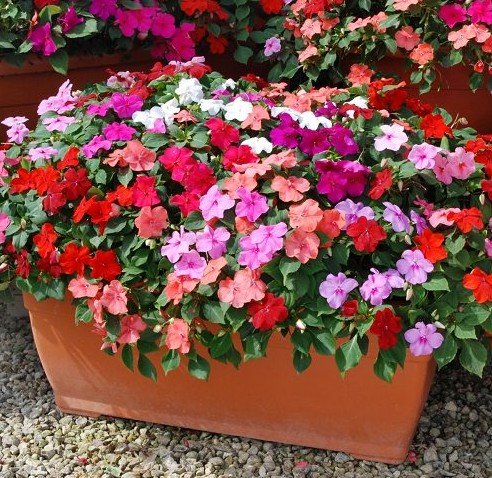
"IMPATIEN" FOR SPRING?
No matter how you spell it, Impatiens are a wonderful source of color for your garden and are one of the sure signs of Spring. Impatiens flower non-stop May through November, need little fertilizer, are relatively resistant to most diseases and insects, and are among the few colorful annuals that thrive and bloom in full shade. Impatiens are actually a perennial but are considered an annual as in most areas they are killed off by frost.
Impatiens work well in flowerbeds, borders, edging, mass plantings, planters, window boxes, and are well suited for hanging baskets or potted containers.
Impatiens are commonly available in three varieties, although many more varieties exist.
I.balsamina, typically known as Balfour’s Balsam or Balfour’s Touch-me-nots or poor man’s orchid.
I.wallerana, the traditional, most commonly grown, garden impatien referred to as Busy Lizzies or Touch-me-nots.
I.hawkeri, the New Guinea impatien.
The balsam impatien typically grows as a two or three-stemmed plant to a height of 2 ½ feet plus. This species has orchid-like pinkish purple flowers tucked among bright dark green leaves. It prefers moist, shady areas and can be invasive in some areas. It is a perennial in warm climates and an annual in cooler climates.
The I.wallerana impatien grows to a height of approximately 2 feet and produces single or clustered flowers on short stalks that rise above the foliage for a glorious floral display.
Popular hybrid varieties offer more heat tolerant and mildew resistant including varieties such as:
Blue Diamond – shades of blue to violet.
Fiesta Series – double flowers in peppermint, white or mixed colors; thrives in both shade and partial shade.
Dazzler Series – brights shades or red, pink, white and orange, perfect for containers.
DeZire Series – offers versatile plants that are fit for containers, hanging baskets, and garden use.
The latest impatien to be introduced to the market is I.hawkeri or the New Guinea impatien, originating from Papua New Guinea. It is sun-tolerant and also grows to about 2 feet in height but has two distinguishing features – larger single or double flowers of up to 3 inches in diameter and variegated leaves ranging from dark green, bronze to maroon. New Guinea impatiens are ideal for bright, partially shaded areas.
Some of the best varieties of New Guinea impatiens include:
Celebrette Series – forms shell pink flowers with a violet blotch; trives in full to partial shade.
Clockwork Series – displays uniform habit and large flowers in almost every color.
Harmony Series – flowers early and consistently from spring until fall in four colors – Salmon, magenta, orange, purple.
Sunstanding Series (including Salmon Pink and Painted Paradise Lilac) – distinct, vibrant blooms for high-impact garden displays with a compact growing habit; does well in the sun or shade.
Colors and more colors. Impatiens color range crosses a large spectrum from burgundy and reds to pink, bright oranges, coral to salmon, white and magenta to violet purple and lavender blue, and all shades in between. Impatiens are available in solid colors and also in bi-color and double flowering forms for a spectacular display.
Planting Tips
You will do best by growing impatiens in moist, rich, well-drained soil. The three varieties like continuous shade or at least filtered light, possible morning or later-afternoon sun. New Guinea impatiens will take full sun for a couple of hours in the morning if the soil’s moisture level is kept high. Too much sun will produce heavy foliage and fewer flowers. Similarly, too much fertilizer, especially those high in nitrogen, will encourage lush foliage growth and limit flower formation.
Mix compost or other organic amendments into the soil and polymers into potting mix to help reduce water frequency. Water plants before removing them from their temporary nursery container. Dig planting holes twice the size of the rootball and plant at the depth at which the impatiens were growing in their original container. Be sure to water thoroughly after planting and then keep the soil consistently moist. Don’t let impatiens dry out completely or they will wilt. However, a good watering will usually spring them back to life.
Designing with Impatiens
Mix two or three complementary or contrasting colors and then add a few whites to add sparkle to the mix.
Weave single colors in and out of permanent shrubbery for a more formal look.
Use pale impatiens to brighten up dark borders or add brightness to an otherwise dark area below a tree.
Integrate one or several colors with ferns, begonias, coleus, fuchsias, hydrangeas lobelias, or other fine-textured, shade loving plants. For example, combine white impatiens with white-edged hostas or intermix orange impatiens with lime coleus and ferns.
Cluster impatiens in containers, pots, moss-lined hanging baskets, and window boxes.
Include mass plantings of single colors for a dramatic impact.
You simply just cannot go wrong with impatiens.