
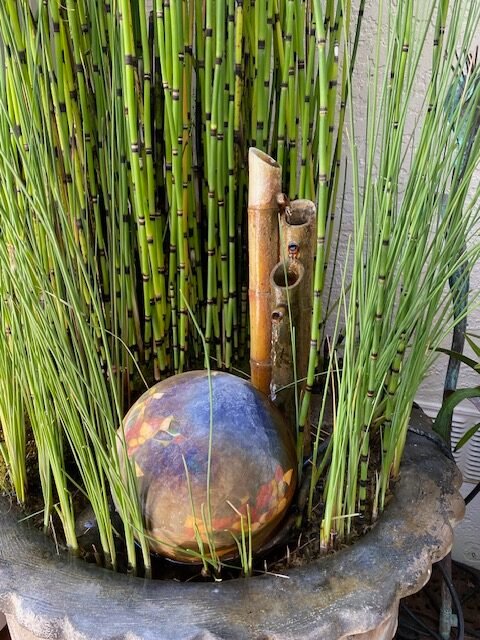
Water in the Garden
Water has immense attractions. It has a relaxing effect with the refreshing coolness it brings, the tranquility of sounds it offers, and the sheer beauty of nature that it invokes. Water features for centuries have created natural focal points in the garden. Today, there are many options available to bring the essence of water into your garden setting – from the simple birdbath and the large variety of fountains to elaborate ponds, waterfalls and self-constructed container water gardens.
Thanks to modern technology, establishing a beautiful water garden can be a simple weekend job requiring only a minimum of skills. Water gardens can take the form of waterproof containers on the patio or a half-barrel with a fountain tucked into the garden foliage. Before you begin, consider these things:
Sunlight – most water plants require 4 to 8 hours of sunlight. Lower light conditions are possible but will limit your choice of plants.
Location – select a spot that is level, where it can be easily enjoyed such as a deck or patio and you can keep an eye on the water level, container and plants.
Water and electricity – containers will need to be periodically refilled due to evaporation. If you incorporate a circulating pump, filter or fountain, access to a ground fault circuit interrupter (GFCI) electrical outlet suitable for outdoor use will be needed.
Maintenance – although a relatively self-contained ecosystem, periodic maintenance will be needed, for example, to remove debris, clean pumps, replenish water, add plant fertilizers and care for plants.
To get started in building your water garden, first select a combination of plants that will oxygenate the water, compete with algae to help with water clarity, and take up nitrogen to balance the ecosystem. Select only plants suitable to having their root structure submerged under water and which have been potted in water growing media. Flowering plants are available in a variety of colors and foliage pond plants offer interest through their textures and variegations ranging from shades of green to copper and bronze. In general, there are four basic categories of water plants to select from:
Floating Plants – float freely on the water’s surface, shading the water to reduce the amount of light needed for algae growth. They typically reproduce quickly and require periodic thinning. Examples include water hyacinth, parrot’s feather and water lettuce.
Surface Plants – potted plants with foliage that float on the water’s surface. By blocking sunlight, they also inhibit algae growth. Examples include water lilies, lotus and parrot feather.
Submerged or Oxygenating Plants – leaves of submerged plants remain underwater and rarely protrude above the waterline. They may be potted, or float freely and typically are also fast growers requiring thinning. They produce oxygen for use by both plants and fish and deprive algae of nutrients by utilizing nitrogen produced by decaying plant material. Examples include hornwort, cabomba and anacharis.
Marginal or Bog Plants – prefer roots and lower parts submerged in shallow water. They also compete with algae for available nitrogen thereby inhibiting algae growth. Examples include black taro, sweet flag, horsetail rush, and dwarf cattail.
Next, select a container. Just about anything that is watertight is a possibility. For example, a sturdy wine barrel, cut neatly in half is a perfect choice with the addition of either a snugly fitting plastic liner or a purchased preformed barrel liner. As a general rule, the container should hold a minimum of five gallons, and be 18 inches in both diameter and depth. Some other container choices include terracotta pots, galvanized buckets or tubs, oversized dishes and bowls, and plastic planters.
Third, add your water plants. Use bricks or old terracotta pots to prop potted plants off the bottom to obtain their proper water depth. Avoid overcrowding. The rule of thumb is that foliage should cover no more than two-third of the water surface. Good air circulation is needed to allow plants to flourish disease free. Typically, two to three potted plants and a few floaters will make a strong visual statement and avoid overcrowding. Finish by adding a low-flow pump or fountain to circulate the water and help maintain water clarity. Now, simply add water and sit back and relax to the soothing sounds of your new water garden. As an added benefit, most water gardens attract a variety of wildlife including birds, butterflies, and frogs among others.
In terms of maintenance tips, if algae does develop, remove the water plants, empty out the water, clean the container and refill with clean water. Although mosquitoes are not typically a concern, if they do develop, remove them by overfilling the container and letting the mosquito larvae run out with the water flowing over the top. As a preventative tip, try adding a drop of cooking oil to the water every couple of weeks. The oil creates a film over the water’s surface that is harmless to plants but prevents mosquito larvae from coming up for air.