
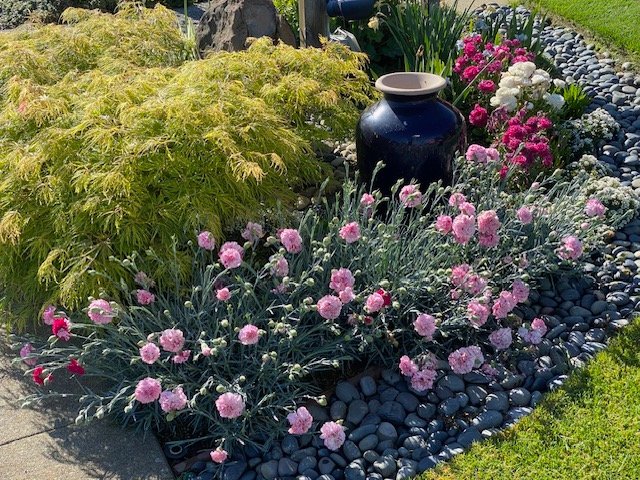
SPRING'S BOUNTY OF COLOR
What’s new for Spring – flowers that are small, fragrant and unique; colors that are rich, deep, and strong. The pendulum has swung away from the gentle pastels of the past. Orange is the “new” color for the season and can be dramatic when combined with waves of blue and splashes of lime green. Or try mixing orange with yellows accented by purples and whites for a fresh new look.
Smaller flowers including miniatures are high on most gardeners’ list. Why? They are hardy performers, typically come back year after year and are well suited in today’s smaller or specialized gardens such as rock gardens, containers and perennial beds. And fragrance in flowers is becoming a must after being sacrificed for so long in the past for flower color, size and uniformity.
Spring offers a wide array of annuals to choose from – alyssum, begonia, bacopa, coleus, dianthus, fuschia, impatiens, lobelia, marigold, million bells, petunia, pansy, salvia, snapdragon, verbena, viola, vinca, zinnia to name just a few. Annuals provide brilliant, temporary color for one to two seasons. Use them to fill beds, borders and containers with vivid color to brighten up a shady corner, accent special parts of your landscape or tie one area to the next with a progression of color.
Perennials are perfect for lower-maintenance gardens as they typically grow and bloom for several years without needing to be reseeded or replanted. Perennials can be used as garden anchors in mass plantings of annuals and include such plants as bleeding heart, calla lily, candytuft, carnation, crocus, foxglove, freesia, hyacinth, Iceland poppy, iris, peony, ranunculus, and sedum.
Whether a large cottage garden or small private courtyard, there are several easy garden design styles in which you can proudly display your annuals and perennials.
Color Theme – plant areas in shades of a single color (e.g., blue). For larger areas, use either a contrasting color (e.g., yellow) or a color blend (e.g., purple and dark red) in adjacent areas.
Formal – establish a framework by repeating a simply pattern of planting, using the same plants such as boxwoods to define a solid outline of the pattern. Fill in the surrounding areas with annuals and perennials of your choice.
Mass Plantings – select plants that blend well together in terms of color, texture and foliage. Three to seven planting types work best, planted in small clusters of each type for maximum impact.
Mixed Borders – plant a combination of roses, shrubs, ferns and flowering plants with an emphasis on annuals and perennials for a bold colorful display that can be refreshed each season.
Before planting, be sure to turn over the soil to at least an 8-inch depth. Add peatmoss, compost or other organic matter. Select a design of your choice, and plantings best suited to the existing light conditions. Place the plants in consideration of their fully-grown heights, starting with the smallest on the outside perimeters and working your way inward to the tallest. If possible, plant in the late afternoon when temperatures are cooler and the sun is less intense. Be sure to add a time-released fertilizer and water thoroughly to help the new additions to your garden get off to a good start. And then enjoy the bounty of color throughout Spring and beyond!